


The Château Mille Roses Vineyard - 6 gravel plots
Our Vines
A terroir that speaks before the man
For Château Mille Roses, the winemaker's work begins with a simple conviction: the terroir must express itself, not be corrected. The vine, the soil, and the climate make the wine. Vineyard management and cellar expertise exist to reveal this authenticity, never to standardize it. This is what distinguishes a terroir wine from a recipe wine.
The Arsac plateau, our Margaux plots
A few hundred meters from the château, on the southern edge of the Margaux vineyard, Château Mille Roses cultivates two plots on the Arsac plateau, covering a total area of 5.4 hectares. This sector, neighboring the vines of Château Giscours, Château Monbrison, and Château d'Angludet, produces wines of an entirely different nature: deep gravel over yellow clay, typical of the finest terroirs in the Margaux appellation. More depth, more refinement, and a clear aging potential.
The Garonne gravel of Haut-Médoc
The Haut-Médoc vineyard of Château Mille Roses rests on Garonne gravel ridges—deposits of rolled pebbles and sand left by retreating glaciers during the Quaternary period. This sandy-gravelly soil naturally filters water and precisely manages the vine's hydration needs: the water stress necessary for proper ripening sets in without ever becoming excessive. Balance begins in the soil.
The large quantity of light-colored pebbles plays an essential thermal role: they reflect sunlight during the day and release stored heat at night, promoting a slow and steady ripening of the grapes.
The result in the glass: wines that are simultaneously fresh and powerful, delicate and aromatically rich. A terroir of balance, in the strictest sense of the term.

Cabernet Sauvignon
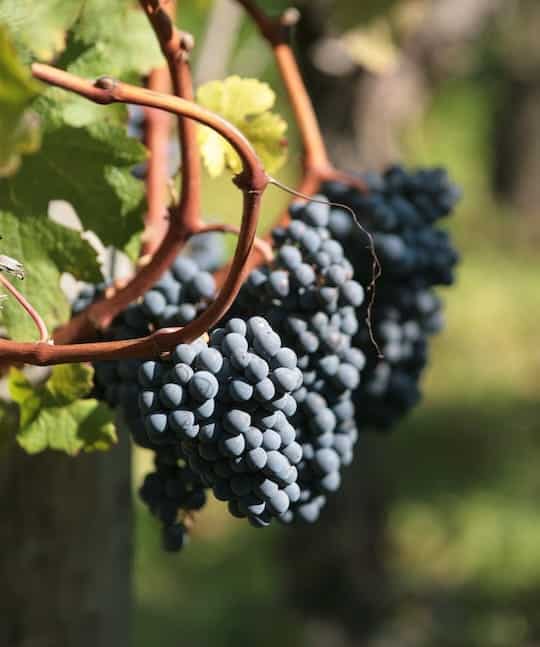
Cabernet Sauvignon is the dominant grape variety. Demanding and late-ripening, it is particularly well-suited to the gravel soils of the Left Bank. It provides tannic structure, freshness, and aging potential.

Merlot
Merlot brings fruit, roundness, and indulgence. Complementary to Cabernet Sauvignon, it ensures the accessibility of young wines without sacrificing complexity.

Petit Verdot
Petit Verdot, grown on a small plot from a house selection, contributes color, acidity, and aromatic complexity to the Haut-Médoc blends.
Deux appellations, 9,5 hectares
Margaux
2 parcelles · Plateau d'Arsac
- Cabernet Sauvignon3,1
- Merlot2,3
Deux parcelles à proximité de Château Giscours, Château Monbrison et Château d'Angludet.
Haut-Médoc
4 parcelles · Macau-en-Médoc
- Cabernet Sauvignon1,75
- Merlot1,75
- Petit Verdot0,6
Quatre parcelles autour du château, entre Château Cantemerle et Château Giscours.
Un vignoble conduit en agriculture biologique
Depuis 2010, l'ensemble du vignoble est conduit en agriculture biologique. Certifié AB par Ecocert depuis 2013, le domaine a supprimé tout herbicide et pesticide de synthèse. Le travail du sol, l'effeuillage manuel, la maîtrise de la surface foliaire et la vendange avec la technique Optigrain, un tri embarqué, voir selon la nécessité une vendange manuelle sont autant de gestes et de techniques qui respectent la vie du sol et l'intégrité du fruit.