


The Cellars of Château Mille Roses - Noble Materials, Calm & Darkness
Our Cellars
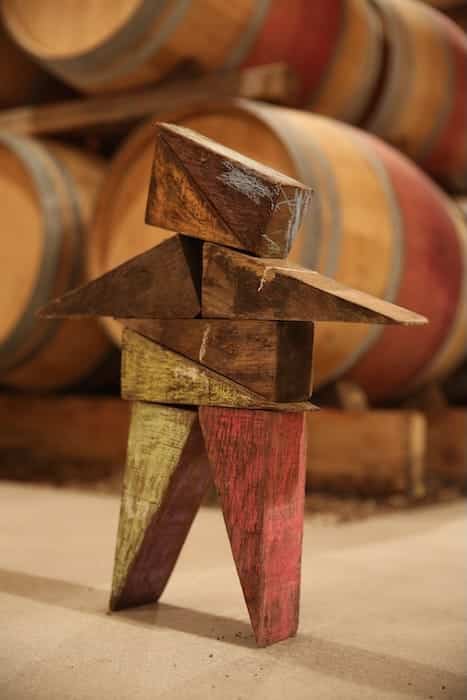
"Stabilize, round out, reveal a wine of fruit and character. The wood must never dominate."
Vinification: precision and respect for the fruit
In the 190 m² vinification cellar, everything is designed to work plot by plot, grape variety by grape variety. Fifteen stainless steel tanks, ranging in volume from 10 to 127 hectoliters, allow each lot to be isolated and the vinification adapted to the maturity achieved in the vineyard. Here, there is no uniform recipe: each plot has its own path to the barrel.
The harvest benefits from the use of an Optigrain harvesting machine that removes impurities. In the cellar, a few additional operations prepare it for transfer into a stainless steel tank. A temperature regulation system eliminates undesirable values during fermentation.
The tanks are deliberately filled sparingly. This technical choice increases the ratio between the height of juice and the surface area of marc, promoting better natural extraction of color and tannins, without forcing. Vinification, including alcoholic fermentation and post-fermentation maceration, lasts between 20 and 35 days depending on the grape variety and the phenolic maturity of the harvest. Experience and tasting determine this tempo, not a pre-established rule.
At the end of vinification, the free-run wines are transferred directly into barrels for malolactic fermentation. The marcs are pressed with a traditional vertical press, which produces high-quality press wines without weighing them down with coarse lees. These lots remain separate from the free-run wines until the first blending.
The aging cellar: patience and revelation
Adjacent to the vinification cellar, the aging cellar houses 150 barrels divided into small distinct groups. This organization is not insignificant: it allows the twenty or more lots that coexist at the beginning of aging to remain clearly identifiable, and prevents premature blending.
At Château Mille Roses, the first blending takes place in spring, when the wines taste better, when the styles are more defined and the differences in quality more apparent. Blending for convenience immediately after malolactic fermentation would be taking the easy way out.
This is not the estate's philosophy, which prefers to allow time for meaningful blending.
The wood used is 80% of French origin, sourced from the finest oak forests of Allier and the Vosges. Five different coopers supply the estate, providing greater complexity in the final blends.
The golden rule: do not dominate. The wood must never overpower the fruit. The percentages of new wood vary from 0% for L'Enfant, aged without new barrels to preserve the fruit, to 33% for the Margaux, where new barrels help round out the significant proportion of Cabernet Sauvignon. Between the two, the Haut-Médoc finds its own balance depending on the vintage.
The bottle cellars: care down to the last detail
Sheltered from light, in a cool, temperature-controlled 150 m² building, the filled and corked bottles await their dressing, stored in cases of 600 units stacked 4 to 5 meters high. Finally, the order preparation room is equipped with modern, high-performance equipment: washing, drying, application of capsules, labels and back labels. Each bottle receives the same attention, right to the very end.
For this dressing process, the estate has recently invested in very high-quality French equipment. A natural presentation requirement, in keeping with the care provided from the vineyard onward.
Un vignoble conduit en agriculture biologique
Depuis 2010, l'ensemble du vignoble est conduit en agriculture biologique. Certifié AB par Ecocert depuis 2013, le domaine a supprimé tout herbicide et pesticide de synthèse. Le travail du sol, l'effeuillage manuel, la maîtrise de la surface foliaire et la vendange avec la technique Optigrain, un tri embarqué, voir selon la nécessité une vendange manuelle sont autant de gestes et de techniques qui respectent la vie du sol et l'intégrité du fruit.